
-

 Vendor:National Safety Compliance
Bloodborne Pathogens Safety Training | Video & Program (English & Spanish)
Regular price From $85.00Regular price -

 Vendor:National Safety Compliance
Bloodborne Pathogens: Healthcare Training | Video & Program (English & Spanish)
Regular price From $85.00Regular price -

 Vendor:National Safety Compliance
All Access Pass (English and Spanish)
Regular price $3,495.00Regular price -
 Vendor:National Safety Compliance
Bloodborne Pathogens Training Booklets (pkg of 10)
Regular price $15.00Regular price -
 Vendor:National Safety Compliance
Bloodborne Pathogens for Healthcare Training Booklets (pkg of 10)
Regular price $15.00Regular price -
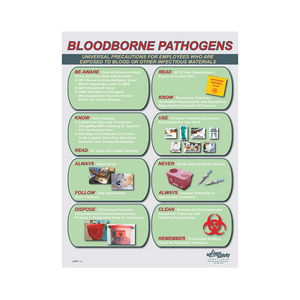 Vendor:National Safety Compliance
Bloodborne Pathogens Informational Poster
Regular price $15.00Regular price -
 Vendor:National Safety Compliance
Protect Yourself From Bloodborne Pathogens Poster
Regular price $15.00Regular price -
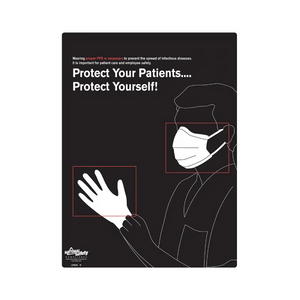 Vendor:National Safety Compliance
Wear Your PPE, Protect your Patients Poster
Regular price $15.00Regular price -
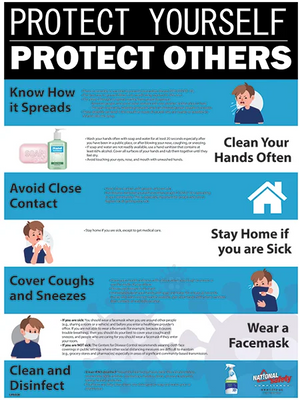 Vendor:National Safety Compliance
Protect Yourself/Others Safety Poster
Regular price $15.00Regular price


Bloodborne pathogens training requirements
OSHA's bloodborne pathogens standard, 29 CFR 1910.1030, applies to any employee with reasonably anticipated occupational exposure to blood or other potentially infectious materials. It is one of the few OSHA standards with an explicit annual training requirement:
- Training at the time of initial assignment to tasks with occupational exposure, and at least annually thereafter — within one year of the previous session
- Additional training whenever tasks or procedures change in a way that affects exposure
- Training must be provided during working hours at no cost to the employee
- Training records kept for three years from the date of training; employee medical records for the duration of employment plus 30 years
The standard also requires a written Exposure Control Plan reviewed and updated at least annually, and the hepatitis B vaccination series offered at no cost within 10 working days of initial assignment. The programs below deliver the training and the records; the Exposure Control Plan is site-specific and yours to maintain.
Which program do you need?
| Program | Who it's for |
|---|---|
| Bloodborne Pathogens Safety Training | General industry — schools, custodial and maintenance staff, first responders, corrections, tattoo and personal service, anyone designated to render first aid |
| Bloodborne Pathogens: Healthcare | Clinical settings — hospitals, clinics, dental, long-term care, home health, labs and anyone handling sharps or specimens |
What's included with every training program
- Training video in English and Spanish
- PowerPoint presentation for classroom delivery
- Compliance manual and training outline
- Employee quiz and answer key
- Completion certificates and wallet / ID cards
- Attendance log and sign-in form — the three-year record the standard requires
- Supplemental printouts
Compare formats
| Format | Access | Starting price | Best for |
|---|---|---|---|
| Streaming | 1-month or 1-year subscription, instant online access | $85 for 1 month, $195 for 1 year | Annual retraining cycles and new-hire onboarding |
| MP4 download | Annual license, tiered by employee count. Both English and Spanish files included. | Varies by employee count | Hosting on your own LMS, file server or SharePoint |
| USB or DVD | One-time purchase, physical media, no internet required | $225 | All-staff in-service sessions |
What the training covers
- Universal precautions — treating all blood and other potentially infectious materials as infectious, regardless of what you think you know about the source
- The three diseases the standard targets: hepatitis B, hepatitis C and HIV — transmission routes and relative risk
- How exposure happens: needlesticks and sharps, cuts and abrasions, mucous membranes of the eyes, nose and mouth
- Engineering and work practice controls, sharps containers and safer devices
- Personal protective equipment — gloves, gowns, eye and face protection
- Cleaning and decontaminating spills of blood and body fluids
- Regulated waste handling and labeling
- The hepatitis B vaccination, and what happens if an employee declines
- Post-exposure evaluation and follow-up — what to do in the first minutes and who to report to
Bloodborne pathogens training questions
How often is bloodborne pathogens training required?
OSHA requires initial training at the time of assignment to tasks with occupational exposure, and annual refresher training thereafter for every employee with occupational exposure. Training must also be provided whenever new tasks or procedures change an employee's exposure. Annual means within one year of the previous session — not simply once each calendar year.
Which course should I choose — general industry or healthcare?
Both cover the same 29 CFR 1910.1030 content. The healthcare version uses clinical scenarios and examples relevant to patient care — nurses, physicians, home health aides, medical assistants, dental and long-term care staff. The general industry version is better suited to schools, custodial and maintenance work, corrections, first responders, personal service, and anyone designated to render first aid.
Does this training satisfy OSHA requirements?
Yes for the training element. OSHA also requires a written Exposure Control Plan specific to your workplace, developed by your organization and reviewed at least annually. A basic Exposure Control Plan template is included in the documentation with these programs as a starting point, but it has to be tailored to your actual tasks, job classifications and controls.
Who has occupational exposure?
Anyone with reasonably anticipated skin, eye, mucous membrane or parenteral contact with blood or other potentially infectious materials as part of their job. That is broader than most employers assume — it commonly includes designated first-aid responders, custodial staff who handle waste, school and childcare staff, corrections officers and maintenance workers, not only clinical personnel.
How long do training records have to be kept?
Three years from the date of training, and the record must include the dates, contents of the session, the trainer's name and qualifications, and the names and job titles of attendees. Employee medical records tied to exposure incidents are kept far longer — the duration of employment plus 30 years.
Do we have to pay for the hepatitis B vaccine?
Yes. The standard requires the employer to offer the hepatitis B vaccination series at no cost to the employee, during working hours, within 10 working days of initial assignment to work with occupational exposure. If an employee declines, they must sign the declination statement, and they can request the vaccination later at any time while still covered.
Reinforce the classroom session
Employee training booklets in packs of 10 are available in general and healthcare versions. Workplace posters cover universal precautions, PPE and exposure response for break rooms, utility rooms and clinical areas.