
-

 Vendor:National Safety Compliance
Confined Space Entry Safety Training | Video & Program (English & Spanish)
Regular price From $85.00Regular price -

 Vendor:National Safety Compliance
Confined Space Entry: Construction Safety Training | Video & Program (English & Spanish)
Regular price From $85.00Regular price -

 Vendor:National Safety Compliance
All Access Pass (English and Spanish)
Regular price $3,495.00Regular price -
 Vendor:National Safety Compliance
Confined Space Entry Training Booklets (pkg of 10)
Regular price $15.00Regular price -
 Vendor:National Safety Compliance
Confined Spaces for Construction Training Booklets (pkg of 10)
Regular price $15.00Regular price -
 Vendor:National Safety Compliance
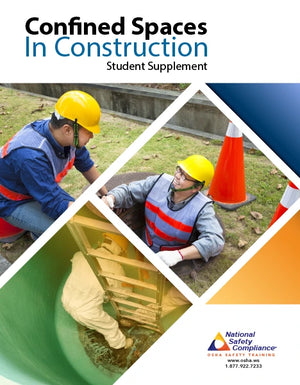
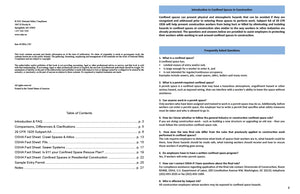
Confined Space in Construction - Student Supplement (pkg of 10)
Regular price $50.00Regular price -
 Vendor:National Safety Compliance
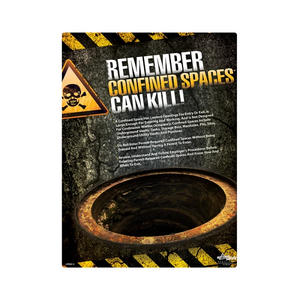
Confined Spaces Can Kill Safety Poster
Regular price $15.00Regular price


Confined space entry training requirements
OSHA's permit-required confined spaces standard for general industry, 29 CFR 1910.146, requires employers to train each employee whose work involves permit spaces before their first assignment, when their duties change, when a new hazard is introduced, and whenever there is reason to believe the procedures are not being followed. Construction work has its own standard, 29 CFR 1926 Subpart AA, which adds continuous atmospheric monitoring and coordination between multiple employers on a site.
Training has to be role-specific. An authorized entrant, an attendant and an entry supervisor each have distinct duties under the standard, and the employer certifies that each has been trained. The programs below deliver the classroom instruction and the documentation to record it; the site-specific procedures, permits and rescue arrangements are yours.
What's included with every training program
- Training video in English and Spanish
- PowerPoint presentation for classroom delivery
- Compliance manual and training outline
- Employee quiz and answer key
- Completion certificates and wallet / ID cards
- Attendance log and sign-in form
- Supplemental printouts
Which confined space program do you need?
| Program | Who it's for | Standard |
|---|---|---|
| Confined Space Entry Safety Training | General industry — manufacturing, utilities, water treatment, food processing | 1910.146 |
| Confined Space Entry: Construction | Construction crews entering vaults, manholes, pits, trenches and tanks on site | 1926 Subpart AA |
Compare formats
| Format | Access | Starting price | Best for |
|---|---|---|---|
| Streaming | 1-month or 1-year subscription, instant online access | $85 for 1 month, $195 for 1 year | Training a crew now, or continuous onboarding |
| MP4 download | Annual license, tiered by employee count. Both English and Spanish files included. | Varies by employee count | Hosting on your own LMS, file server or SharePoint |
| USB or DVD | One-time purchase, physical media, no internet required | $225 | Toolbox talks and jobsites with no connectivity |
What the training covers
- What makes a space a confined space, and what makes it permit-required
- Atmospheric hazards — oxygen deficiency and enrichment, flammable atmospheres, toxic gases
- Testing and monitoring the atmosphere before and during entry
- The entry permit: what it authorizes, who signs it, when it expires
- Duties of the authorized entrant, the attendant and the entry supervisor
- Ventilation, isolation, lockout and blanking
- Retrieval systems, rescue planning, and why untrained rescue attempts cause additional fatalities
- Signage and posting requirements for permit spaces
Confined space training questions
What is the difference between a confined space and a permit-required confined space?
A confined space has limited means for entry or exit and is not designed for continuous occupancy — a tank, pit, vault or manhole, for example. A permit-required confined space has one or more additional hazard characteristics: a potentially hazardous atmosphere, engulfment potential, converging walls or a tapered floor that could trap an entrant, or any other recognized serious safety or health hazard. Permit spaces trigger the full entry permit, atmospheric testing, attendant and rescue requirements.
Who needs confined space training — just the entrant, or also the attendant and supervisor?
OSHA requires training for all three roles: authorized entrants, attendants who monitor from outside the space, and entry supervisors who authorize and terminate entry. The programs below cover the responsibilities and training requirements for each role, so one classroom session can cover a whole entry team.
Should I choose the general industry or the construction course?
It depends on the standard your work falls under. General industry employers — manufacturing, utilities, water and wastewater treatment, food processing — follow 1910.146. Construction employers follow 1926 Subpart AA, which adds continuous atmospheric monitoring and requires coordination among controlling, host and entry employers on a shared site. The construction version also uses jobsite scenarios and language. If your crews do both, many employers train on both.
Does this training satisfy OSHA requirements?
It covers the classroom instruction the standard requires. OSHA also requires a written confined space program, site-specific entry permits for each permit-required space, and documented rescue procedures — these are developed by your organization for your own spaces and cannot come from a video. The compliance manual included with each program gives you a starting framework.
How often is confined space training required?
Before an employee's first assignment involving permit spaces, then again whenever their duties change, when a new hazard is introduced into a space, and whenever the employer has reason to believe the entry procedures are not being followed correctly. Many employers run an annual refresher as a matter of practice.
Reinforce the classroom session
Employee training booklets in packs of 10 cover general industry and construction confined space entry separately. The OSHA student supplement for confined spaces in construction and a workplace poster round out the set.