
-

 Vendor:National Safety Compliance
1926 OSHA Construction Industry Regulations (2026 Edition)
Regular price $48.00Regular price -

 Vendor:National Safety Compliance
1910 OSHA General Industry Regulations (2026 Edition)
Regular price $53.00Regular price -

 Vendor:National Safety Compliance
CFR 1910 General Industry & CFR 1926 Construction Industry Regulations (2026 edition)
Regular price $80.00Regular price -
 Vendor:National Safety Compliance
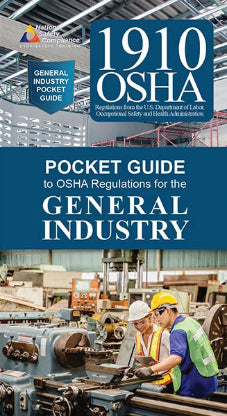
General Industry OSHA 1910 Pocket Guide (2023 ed)
Regular price $15.00Regular price -

 Vendor:National Safety Compliance
Construction Industry OSHA 1926 Pocket Guide (2022 ed)
Regular price $15.00Regular price -

 Vendor:National Safety Compliance
OSHA Focus Four Hazards for Construction (pkg of 10)
Regular price $60.00Regular price -
 Vendor:National Safety Compliance
OSHA Outreach Student Handout Packet (pkg of 10)
Regular price $50.00Regular price -
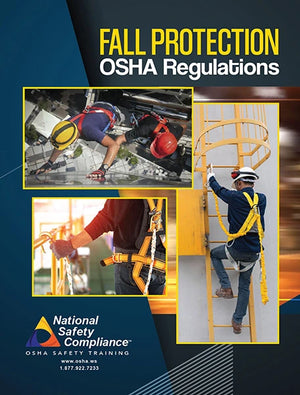 Vendor:National Safety Compliance
Fall Protection Standards & Regulations
Regular price $40.00Regular price -
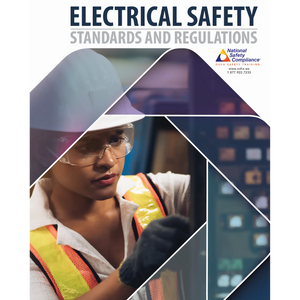 Vendor:National Safety Compliance
Electrical Safety Standards & Regulations
Regular price $40.00Regular price -
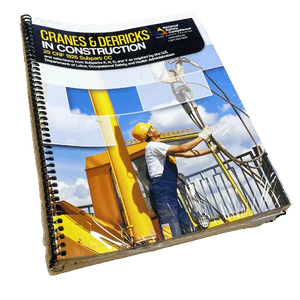
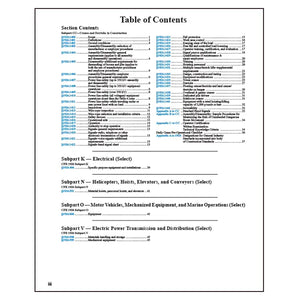 Vendor:National Safety Compliance
OSHA Cranes and Derricks Regulations Spiral Bound (pkg of 10)
Regular price $80.00Regular price -

 Vendor:National Safety Compliance
OSHA Crystalline Silica Supplement Construction Industry (pkg of 10)
Regular price $50.00Regular price -

 Vendor:National Safety Compliance
Confined Space in Construction - Student Supplement (pkg of 10)
Regular price $50.00Regular price


Which OSHA standards volume do you need?
OSHA publishes its workplace safety standards in Title 29 of the Code of Federal Regulations, split into separate parts by industry. The two that cover most employers are 29 CFR Part 1910, the General Industry standards, and 29 CFR Part 1926, the Construction standards.
General industry is the default: manufacturing, warehousing and distribution, healthcare, and most other fixed workplaces fall under 1910. Construction work — building, altering or repairing, including painting and decorating — falls under 1926. Some employers need both, because a general industry facility running its own construction or renovation work is subject to the construction standards for that work. Where a construction topic is also governed by a general industry rule, the construction volume carries in-cite references back to the relevant 1910 sections.
Both volumes also include Part 1903, covering inspections, citations and penalties, and Part 1904, covering recordkeeping and the reporting of occupational injuries and illnesses.
What’s in the 29 CFR regulation volumes
- Complete regulation text for the part — all of 1910 or all of 1926
- Parts 1903 and 1904, plus OSHA Form 300 and OSHA’s Cancer Policy
- Two-color layout that separates regulation text from headings for faster lookups
- Most Frequently Cited Standards listed ahead of the relevant Subparts
- An interpretations icon marking which regulations have OSHA letters of interpretation to reference
- A summary of regulation changes for the period between editions
- Printed on paper suited to highlighting and margin notes
The volumes are updated once a year. The current editions are 2026 for both the general industry and construction volumes.
Compare formats
| Format | What it is | Price | Best for |
|---|---|---|---|
| Perfect Bound | 8.5″ × 11″ glue-bound book with a two-color tab edge showing regulation title and number | $48 construction / $53 general industry | A durable desk or shelf copy |
| Premium Bound | Loose-leaf pages in a PVC-free 2″ three-ring binder with tabs and four internal pockets | $69 | Heavy note-taking, highlighting, and adding your own supplements |
| Book on USB | Searchable PDF with linked Table of Contents and Index; no internet connection required | $48 construction / $53 general industry | Safety professionals working across multiple sites |
| PDF Download | Instant digital access to the same volume | $48 construction / $53 general industry | Needing the standard text today |
| Both volumes on one USB | 29 CFR 1910 and 29 CFR 1926 together, printable and searchable, with an OSHA keyword dictionary | $80 | Employers subject to both general industry and construction standards |
The construction volume is available in English or Spanish. The general industry volume is available in English.
Which publication do you need?
| Publication | Who it’s for | What it contains |
|---|---|---|
|
29 CFR 1910 / 1926 regulation volumes 2026 editions |
Safety managers, EHS staff and anyone who needs to cite the standard as written | The complete regulation text, plus Parts 1903 and 1904, Form 300 and the change summary |
|
Pocket Guides General industry and construction |
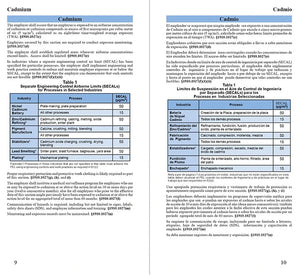
Field supervisors, foremen and crews who need a quick answer on site | Bilingual summaries of the most frequently used standards, listed alphabetically with the regulation reference. English on the left page, Spanish on the right. 95 pages, 4.5″ × 8.25″ |
|
Focus Four Hazards for Construction Package of 10 |
Anyone running 10- or 30-hour OSHA Construction Outreach classes | Lesson material on the four leading causes of construction fatalities — falls, caught-in or -between, struck-by, and electrocution — with fatal-facts summaries, toolbox talks and checklists. 64 pages |
|
Outreach Student Handout Packet Package of 10 |
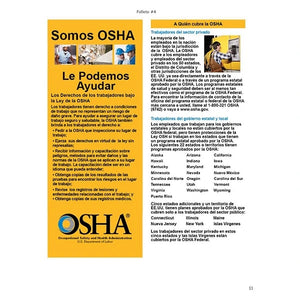
Outreach trainers covering the required workers’ rights component | The five OSHA handouts for that component collected in one 16-page booklet, including the OSHA poster, the PPE payment handout and the Whistleblower Program fact sheet |
|
Topic supplements Electrical Safety, Fall Protection |
Crews and trainers focused on a single hazard | The standards and regulations for that hazard on their own, rather than the full volume |
|
Industry volumes Oil & Gas, Maritime |
Employers in industries with their own regulatory set | The regulations specific to that industry |
|
Training supplements Crystalline silica, confined space in construction, cranes and derricks |
Trainers delivering a specific program | Student material in packages of 10 to hand out alongside the training session |
The Focus Four booklets, Outreach handouts and training supplements are sold in packages of 10 — priced for handing one to each student in a class. Focus Four and the Outreach Student Handout Packet are each available in English or Spanish.
Publications for OSHA Outreach classes
The 10- and 30-hour classes in OSHA’s Outreach Training Program have specific material requirements. Construction Outreach classes include lesson plans on each of the Focus Four hazards, and all 10- and 30-hour courses include a one-hour component on workers’ rights built around five OSHA handouts. Both sets of material are available here as printed student booklets, so trainers do not have to assemble and photocopy them.
These are student materials for a class you deliver. Outreach trainer authorization itself comes from an OSHA Training Institute Education Center, not from any publication.
OSHA publication questions
What is the difference between 29 CFR 1910 and 29 CFR 1926?
1910 contains the General Industry standards and 1926 contains the Construction standards. Which applies depends on the work being performed, not on what kind of company you are — a manufacturer doing its own renovation work is subject to the construction standards for that work. Employers whose crews do both often keep both volumes, or the USB that carries both.
How often are the regulation volumes updated?
Once a year. The current editions are the 2026 editions. Because OSHA amends standards between print runs, each volume includes a summary of the changes since the previous edition, and the authoritative current text is always the electronic Code of Federal Regulations.
Do I need the full volume or the pocket guide?
They serve different purposes. The full volume carries the complete regulation text, which is what you need to read a standard exactly as written or cite it in a written program. The pocket guide carries plain-language summaries of the most frequently used standards with a reference to the regulation number — useful for answering a question in the field, but not a substitute for the standard text. Many safety managers keep the volume at the desk and issue pocket guides to supervisors.
What is the difference between Perfect Bound and Premium Bound?
Perfect Bound is a conventional glue-bound book — rigid, compact on a shelf, and less expensive. Premium Bound is the same content as loose-leaf pages in a three-ring binder with tabs, which lies flat, lets you reorder or remove sections, and has pockets for your own documents. Choose Premium Bound if you write in your regulations.
Are the standards available in Spanish?
The construction volume is published in Spanish as well as English. Both pocket guides are bilingual, with English and Spanish on facing pages in the same book. The Focus Four booklets and the Outreach Student Handout Packet are each available in an English or a Spanish version.
OSHA publishes the standards for free. Why buy a printed volume?
The regulation text is public and free to read on the eCFR and on osha.gov, and for looking up a single section that is often the fastest route. What these editions add is the packaging around the text: an indexed and tabbed layout built for repeated lookups, the interpretations markers, the Most Frequently Cited Standards ahead of each Subpart, a change summary between editions, and a copy that works in a training room or a truck without a connection — and that an inspector, an auditor or a crew member can pick up and read.
Does having the regulations on hand make a workplace compliant?
No. A reference volume is a tool for understanding what the standards require; compliance comes from the programs, training, recordkeeping and workplace conditions themselves. Many standards carry their own written-program and employee-training obligations that a book does not satisfy on its own.
Which publications suit a training class?
For Outreach classes, the Focus Four booklets and the Outreach Student Handout Packet, both in packages of 10. For a program on one hazard, the matching training supplement — crystalline silica, confined space in construction, or cranes and derricks — also in packages of 10. Pocket guides work well as something to send crews away with after any session.
Reference materials for the rest of your program
Publications sit alongside the training programs and workplace materials that carry the same standards into practice: safety training videos with the trainer documentation to run and record a session, labor law posters for the required workplace postings, and SDS binders for chemical inventory recordkeeping.